The Anti-Finesse Approach
As mapping accuracy improves and marine electronics continue to compress competitive advantages, bass in heavily pressured fisheries have adjusted accordingly. In the forward-facing sonar era, finesse techniques dominate much of the conversation, but their widespread adoption has also made them increasingly predictable.
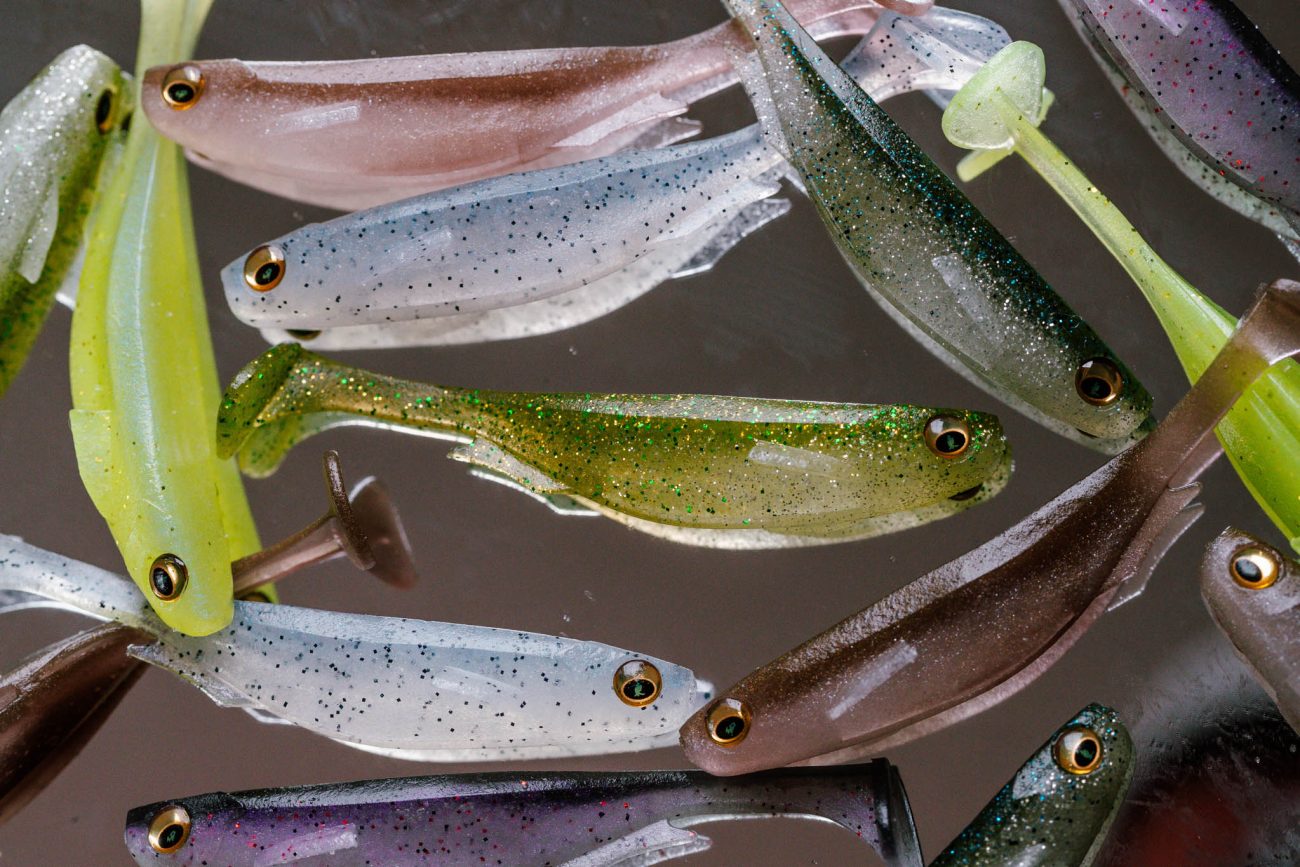
In that environment, separation often comes not from refinement, but from contrast. Veteran angler Bud Cipoletti found that edge by moving in the opposite direction—power fishing vertical cover with a vibrating jig, and embracing imperfection rather than precision. Central to that approach is the SPARK SHAD trailer, which transforms a familiar presentation into something far less orderly, and far more difficult for conditioned fish to ignore.
Accidental Success Leads to a Discovery
The foundation for the technique emerged late in practice on the south end of Lake Champlain, in an area defined by bluff walls and broken rock.
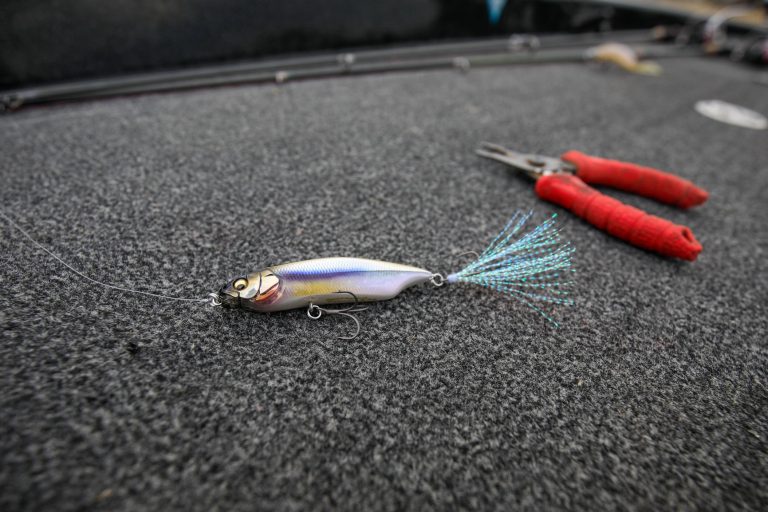
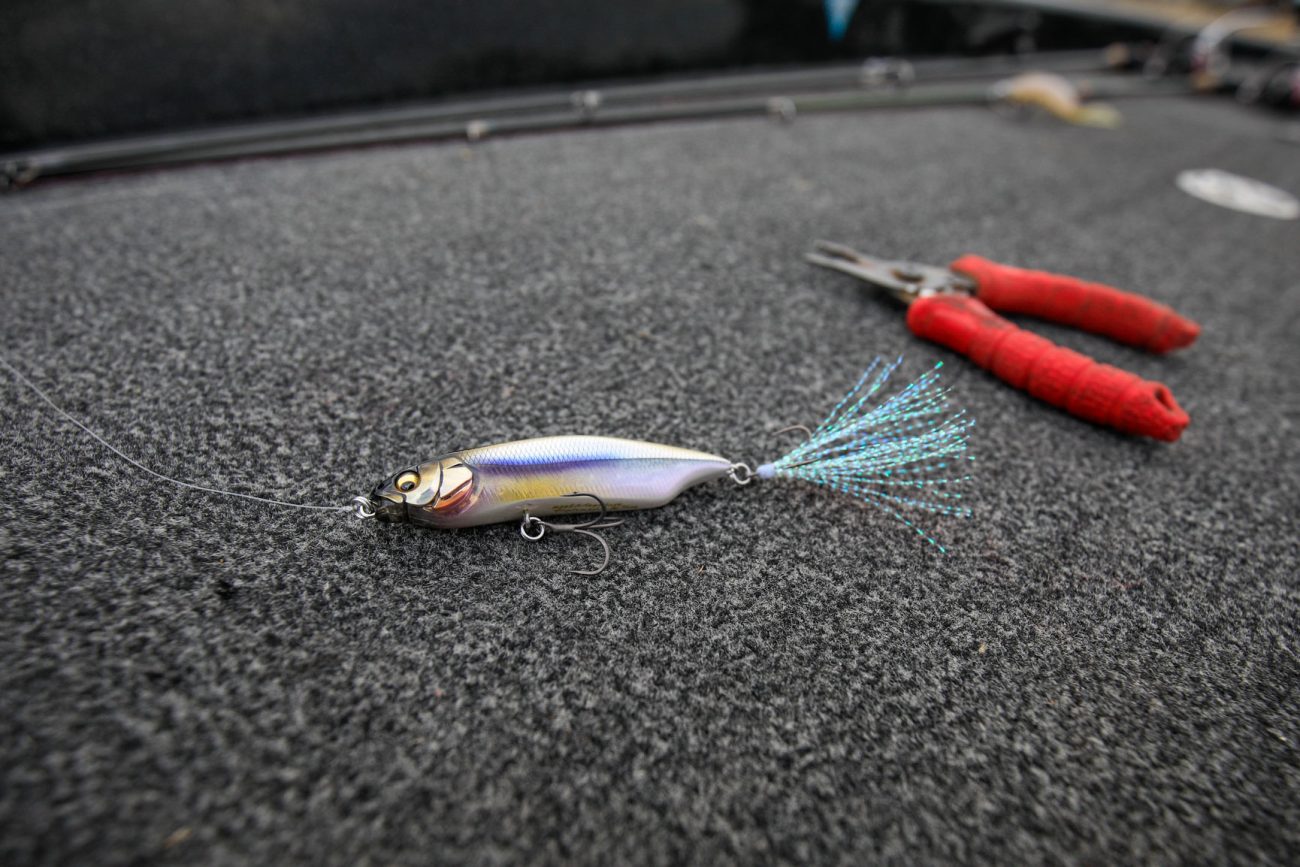
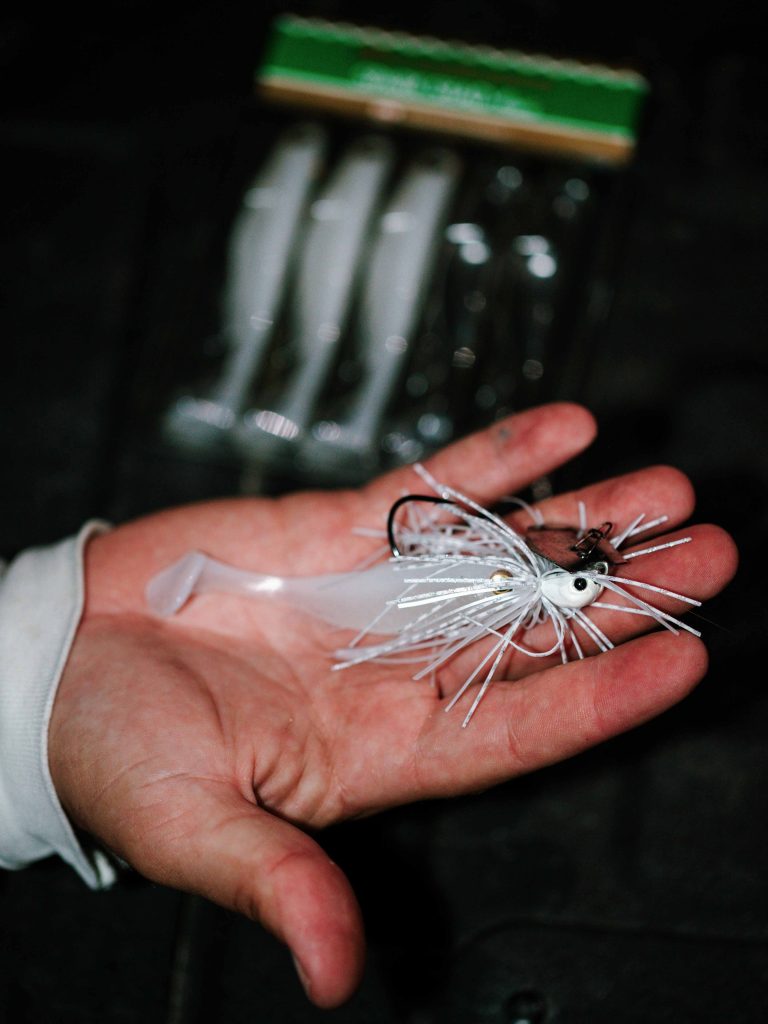
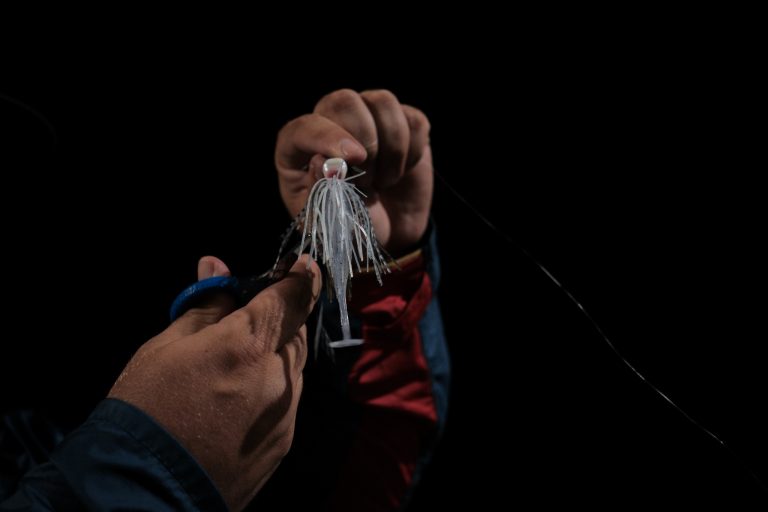
“I had a Chatterbait tied on that I was using to cover water before slowing down with a jig. It was pretty much destroyed, with only half the skirt left.”
Rather than abandoning the bait, he adapted it. As he paralleled a bluff wall from roughly 20 feet out, Cipoletti began fishing the vibrating jig vertically. He tight-lined it down through jagged rock and aggressively pumped it the moment it contacted bottom.
“It was gnarly down there. As soon as it ticked the first rock, I’d pump it hard, like stroking a football jig. On the first flip, I caught a four-pounder.”
The bite prompted immediate experimentation. By working the bait next to the boat, Cipoletti could see how it behaved under tension and slack. What stood out was not vibration, but displacement.
On the first aggressive pump of the rod, the lure surged violently off its line and hunted unpredictably through the water column rather than tracking straight upward.
Keys to an Erratic Action
That erratic movement became the cornerstone of the system. While the vibrating jig provides the framework, the trailer determines the outcome.
The SPARK SHAD plays a critical role in destabilizing the presentation.
“Ribbed swimbaits tend to stabilize the bait. They make it track straight.”
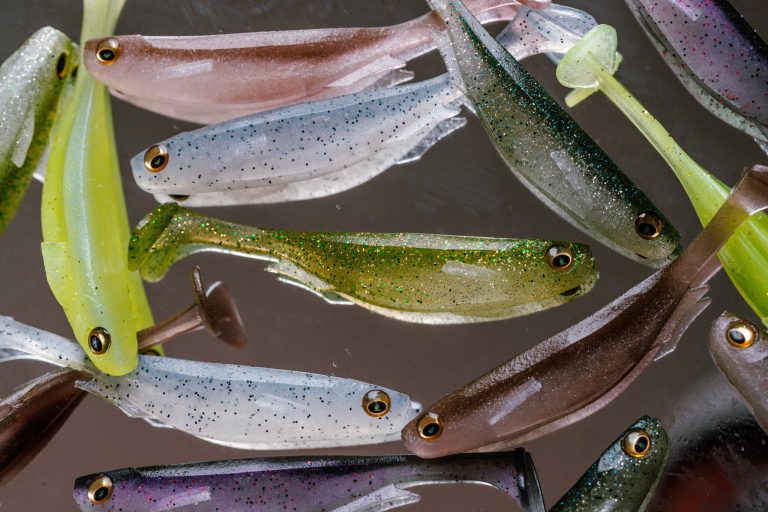
By contrast, the SPARK SHAD’s smooth body and narrow tail section introduce controlled instability. Rather than dampening movement, it amplifies it. The lure is allowed to surge, pivot, and hunt aggressively on each rod pump.
That philosophy extends to the skirt as well. Rather than preserving symmetry, Cipoletti deliberately removes it.
“I want it as messy as possible—at least half of the skirt gone.”
There is no formula to the trimming process. The goal is simply to remove order. Cipoletti typically starts with a shad-based colorway and prioritizes a silver head. When present, strands of pink or purple are left intact.
“Every baitfish has some kind of lavender or pink hue. That detail matters.”
Floating the Jig
Where traditional power fishing emphasizes constant bottom contact, this approach is designed to operate vertically. It is especially effective when bass suspend along hard cover such as bridge pilings, bluff walls, and steep transitions.
Cipoletti refers to the technique as “floating a Chatterbait.”
“I’m always visualizing where the bait is in the water column. I’ll roll-cast it out, tight-line it down like a blade bait, and watch for the line to go mushy.”
That loss of tension signals either proximity to bottom or a strike. From there, the bait is pumped sharply once or twice. This keeps it in the strike zone while forcing sudden directional changes.
Unlike many forward-facing sonar techniques that require extended time on a single fish, this system is built around efficiency.
“I’ll make two or three pumps, like flipping a mat, and then move on. It’s about covering high-percentage water.”
Technique, Tackle, and Tuning
While a half-ounce vibrating jig is often sufficient for horizontal presentations, Cipoletti relies on a three-quarter-ounce model for this vertical, reaction-based approach.
“It’s a reaction bite. Most of the time I’m fishing it in five to 18 feet of water.”
The comparison is less to traditional jig fishing and more to punching heavy cover.
“Think about flipping a one- or one-and-a-half-ounce weight into a mat. Fish eat out of reaction. This is the same concept.”
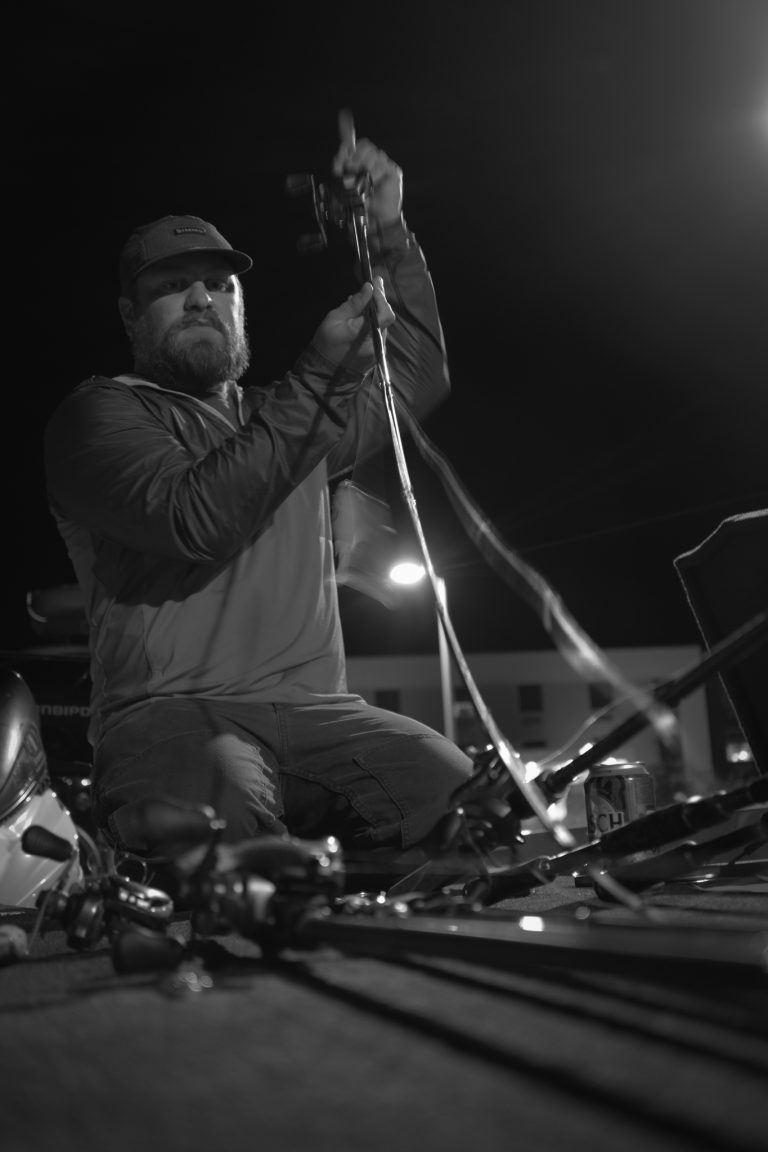
The technique demands specialized equipment. Cipoletti favors a rod with a responsive tip that fully loads on the pump, paired with enough backbone to drive a single hook home from awkward angles. His choice is the DESTROYER P5 (USA) F5-75X JAVELIN, a 7’5” medium-plus rod that balances those requirements.
He pairs it with a high-speed reel in the 7.6:1 to 8:1 range to manage slack line quickly and spools it with 17-pound-test fluorocarbon.
A Versatile Pattern
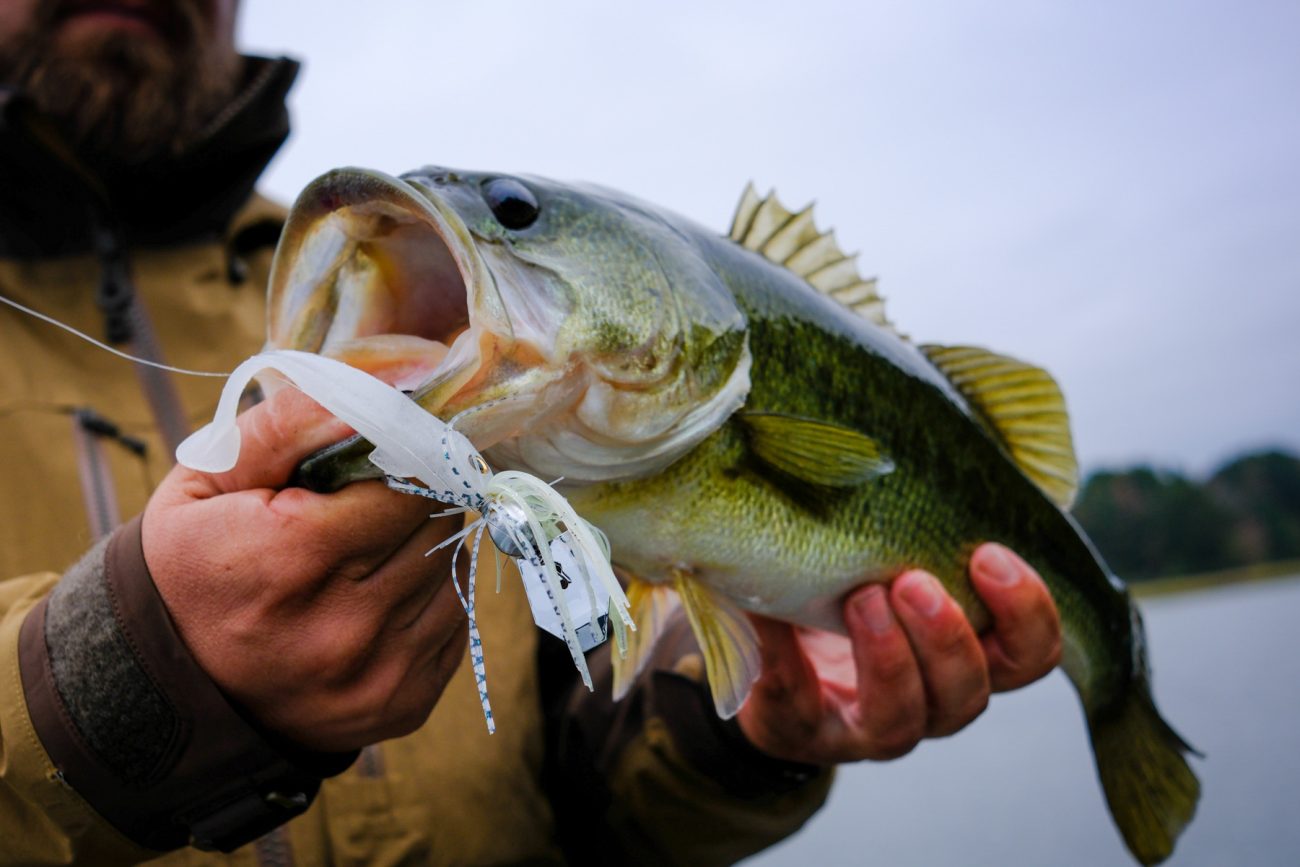
Although the technique was developed in a largemouth-dominant environment, its effectiveness has proven broader.
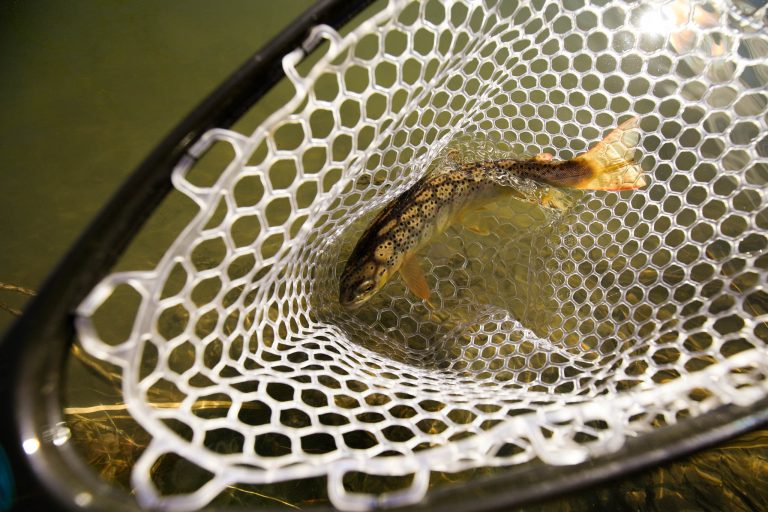
On Champlain, it produced a mixed bag. Cipoletti has since applied it successfully to spotted bass fisheries, including West Point and Lake Hartwell.
“Once I started using it at Hartwell, I never put it down.”
More than a single pattern, the approach reinforced a broader principle that remains relevant even as technology continues to advance.
“I’m always trying to look at things differently. This showed me that in the age of LiveScope, power can still shine.”
In an era defined by precision and restraint, there remains a place for speed, displacement, and reaction. When bass grow accustomed to subtlety, disruption becomes the trigger. Power, applied with intent, still separates.