Replacing Urgency with Confidence
In highly pressured fisheries, fish have become conditioned to speed. Fast-falling jig heads, aggressive retrieves, and predictable flash have become the norm. Often, that speed results in more follows and fewer commitments.
For Arkansas guide and fly tier Daniel Roberts, the answer isn’t adding more action. It is removing it. By slowing the presentation and refining how a bait falls, Roberts has built his system around a single principle. Controlled descent allows the bait to remain in the strike window longer, without unnecessary movement.
Starting at the Vise
As with any fly tier, Roberts’ system begins at the vise, where material selection defines the behavior of the bait.
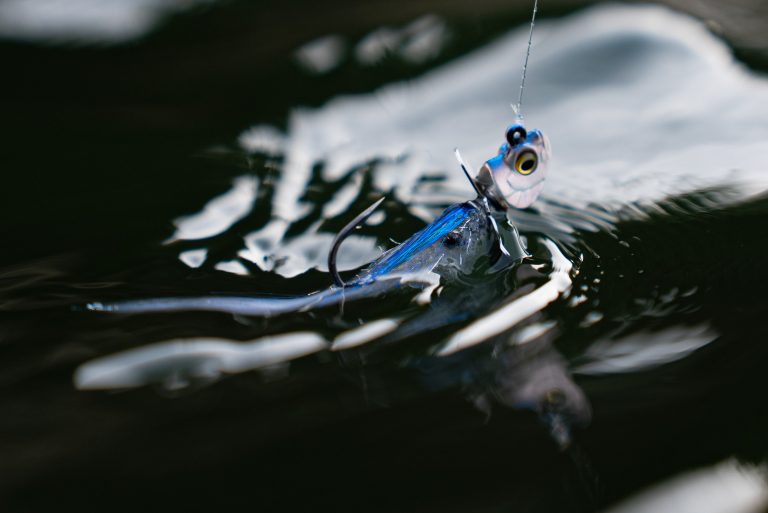
Rather than relying on traditional marabou hair jigs, Roberts treats the design as a platform, blending materials to achieve specific results. Marabou creates maximum movement and drag, bucktail provides a more controlled and stable profile, and synthetics add durability while also helping to slow the sink rate and reduce fouling.
Each choice ultimately shapes sink rate, profile, and how long the bait remains in the strike zone.
Slowing the Fall, Expanding the Window
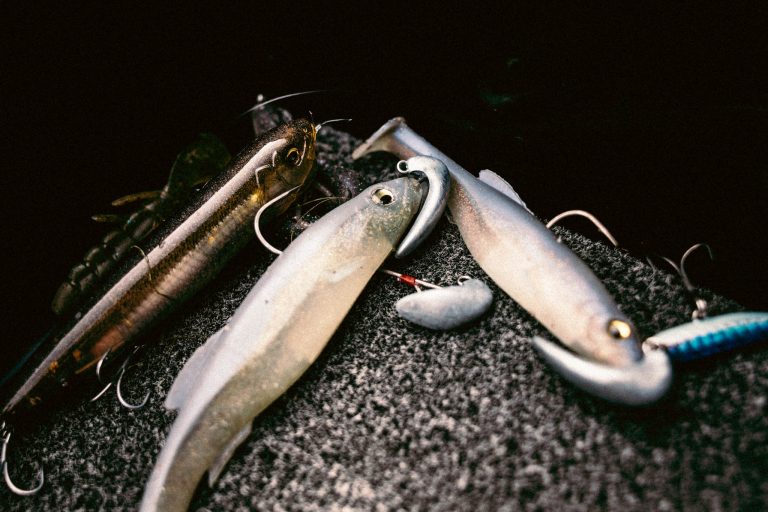
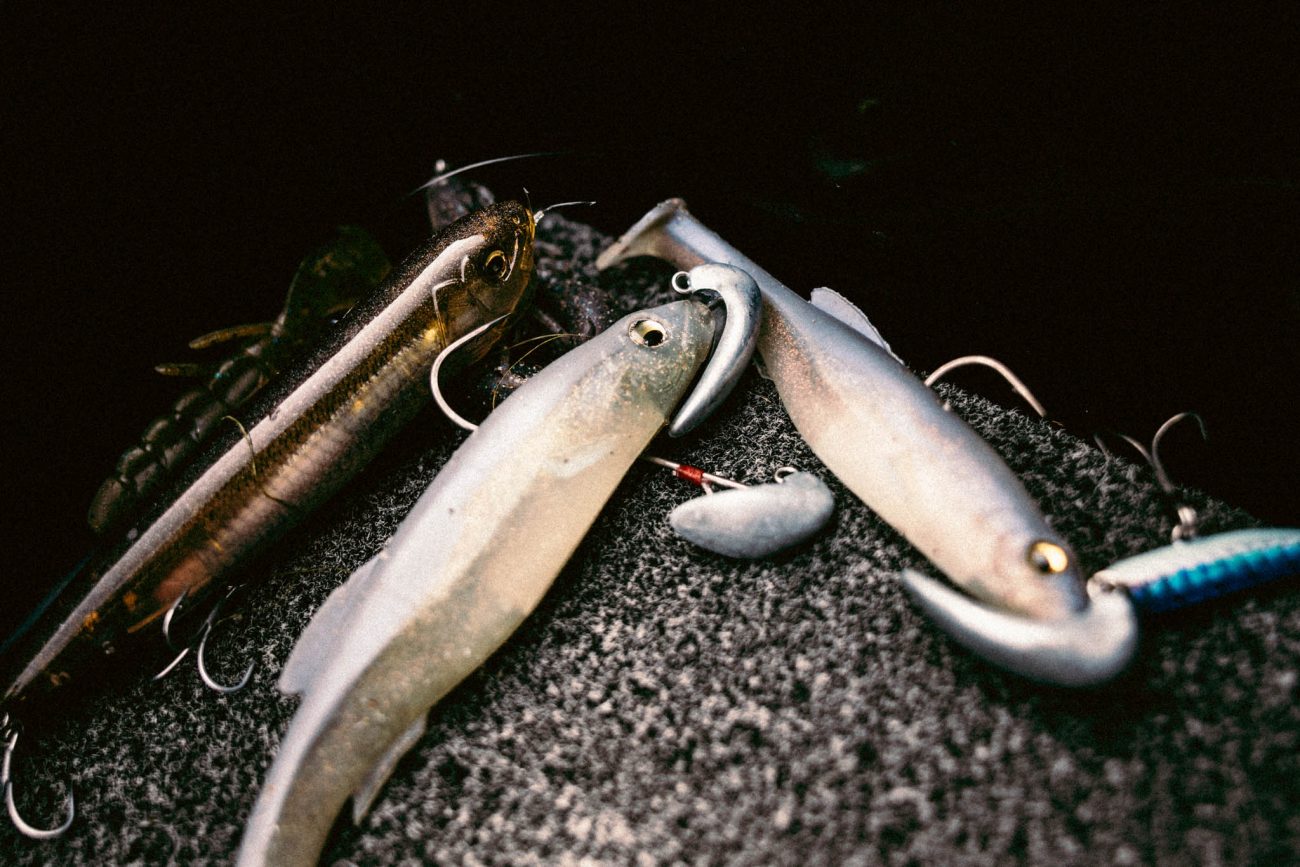
When Roberts was introduced to the screwhead-style jig, it changed the way he approached his hair jig system. The OKASHIRA SCREWHEAD, with its integrated blade, slows the entire presentation, influencing the fall, the swim, and the overall action of the bait.
This approach excels from late winter into early spring, during shad kill conditions, and in cold water situations where forage is suspended. In these conditions, baitfish are lethargic and less responsive, making a slower, more deliberate presentation critical.
The Screwhead's Role
When Roberts was introduced to the screwhead-style jig, it changed the way he approached his hair jig system. The OKASHIRA SCREWHEAD, with its integrated blade, slows the entire presentation, influencing the fall, the swim, and the overall action of the bait.
This approach excels from late winter into early spring, during shad kill conditions, and in cold water situations where forage is suspended. In these conditions, baitfish are lethargic and less responsive, making a slower, more deliberate presentation critical.
The Destroyer P5 Flyssa: Built for the Fall
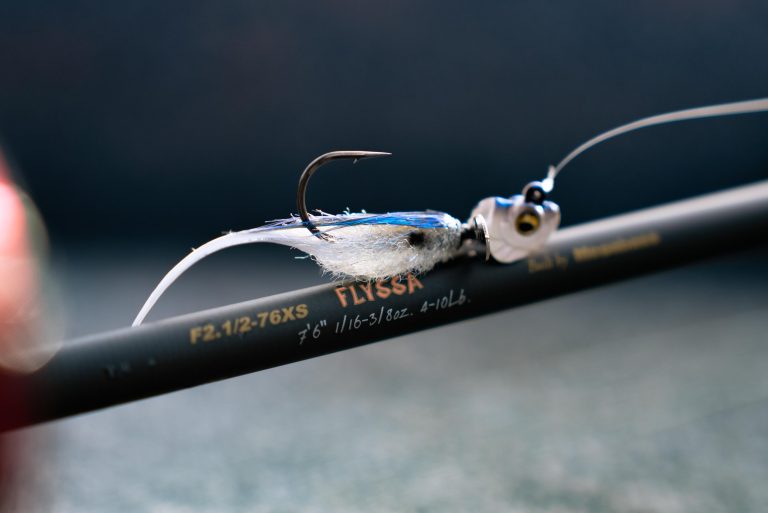
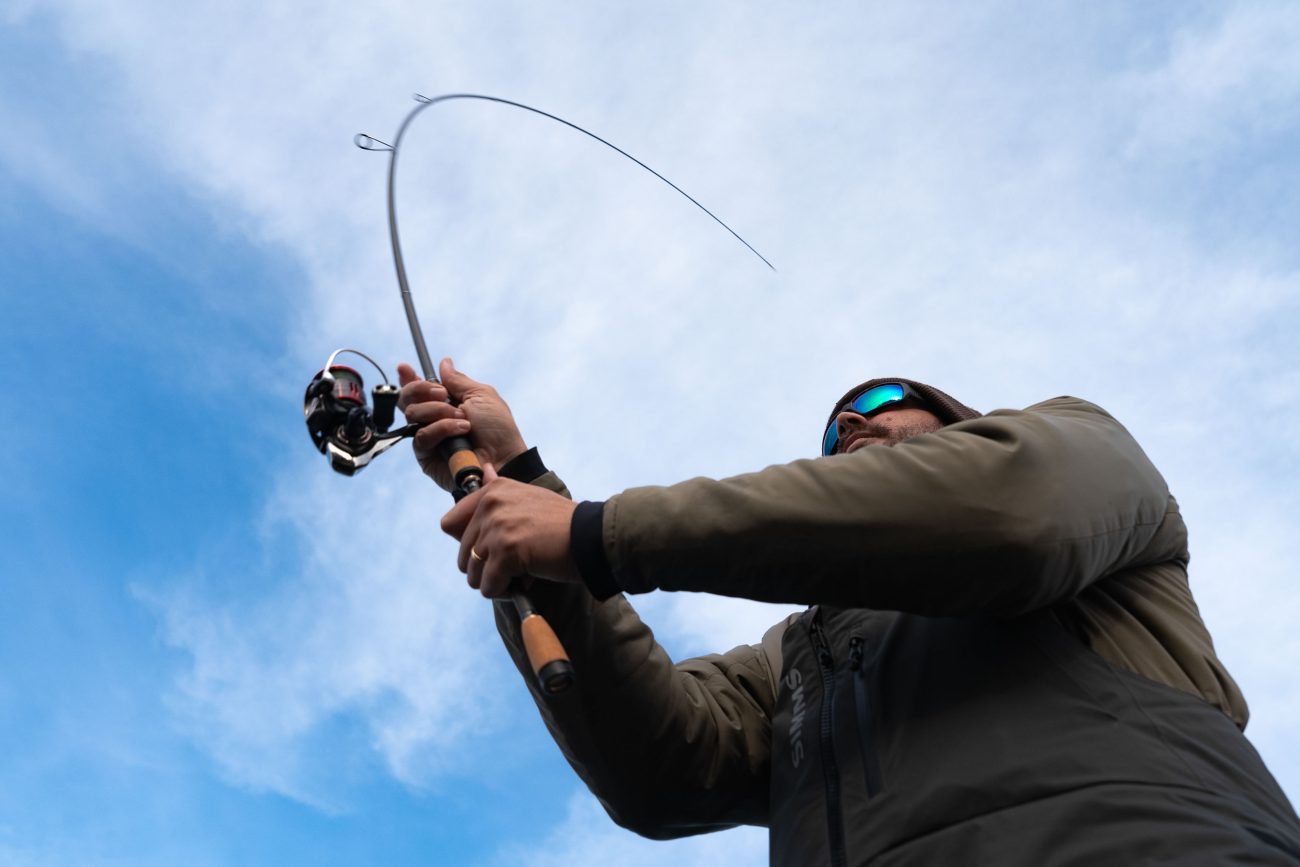
The Destroyer P5 (USA) F2.1/2-76XS FLYSSA is purpose-built for modern hair jig fishing, where control of the fall and sensitivity are everything. Tuned to cast ultra-light hair jigs with ease, its 7’6” length and light-fast taper generate surprising distance while maintaining precision throughout the presentation.
The rod’s smooth, progressive load keeps fish pinned on light line, while its sensitivity allows anglers to detect subtle bites, especially on the initial drop. In a technique defined by nuance, the Flyssa becomes an extension of the presentation itself.
Fishing the Controlled Descent
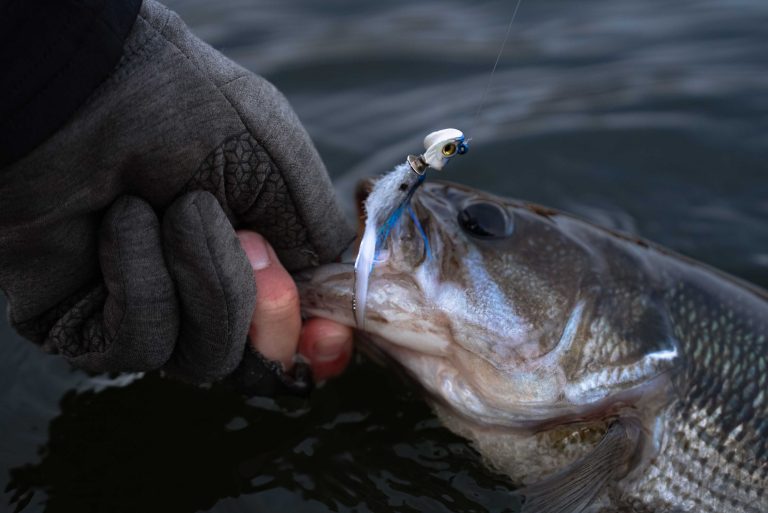
This design is centered around one critical moment: the fall. That initial drop is when Roberts catches most of his fish on a hair jig, making control during descent more important than the retrieve itself.
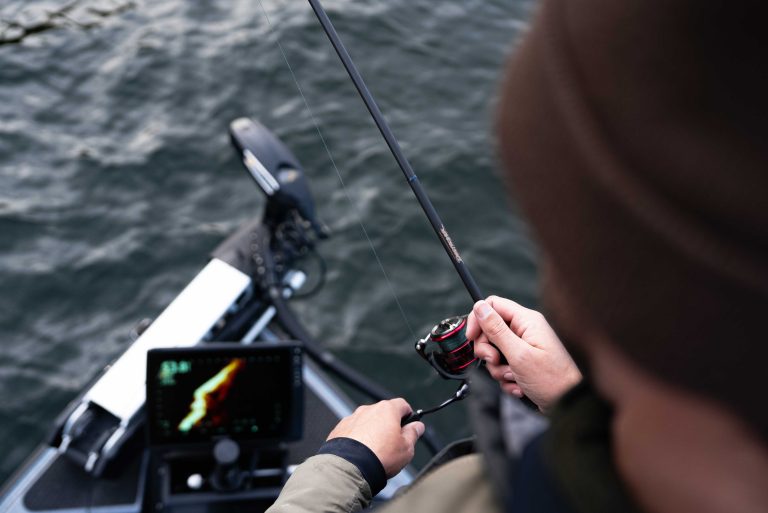
He casts across structure, counts the bait down to the desired depth, and works it back with a slow, steady retrieve, adding subtle rod movement only when needed.
At its core, the presentation is built around matching the moment with a dying shad profile. The goal is not to imitate a perfectly healthy baitfish, but to replicate vulnerability. This is achieved through the subtle, undulating movement of marabou, a smaller profile often under three inches, and a suspended, non-urgent behavior in the water column.
In clear water and pressured systems, this shift from “alive” to “dying” is often what converts interest into committed strikes.
A Collaborative Effort
The development of this approach traces back to a collaborative effort.
Roberts credits fellow angler Chris Palmer with introducing the screw head concept and helping refine the system through early testing.
Precision Through Restraint
Slower, deliberate movement outperforms speed, and subtlety outperforms excess.
Precision is not about adding more. It is about refining what matters.