Strolling Secrets: Origins and Essence
Hailing from Japan’s ultra-pressured waters—including legendary Lake Biwa—strolling emerged as a technique to present minnow-style baits with understated subtlety. Rather than relying on the exaggerated, side-to-side thump of a paddle-tail swimbait, anglers turned to straight-tail plastics, gaining control over their bait’s every move. Utilizing the same jighead rigging as before, they could now make minute adjustments to how their offering would glide, hover, and breathe with nothing more than rod inputs and line tension.
This precise presentation integrated seamlessly with forward-facing sonar to target fish suspended off the bottom with surgical control—coming to define modern mid strolling and the face of tournament angling. With real-time feedback on a glowing screen, the modern mid stroller resembles a puppeteer, pulling a single string as they manipulate their bait with intent, watching fish react—each rise, turn, and follow guiding the next adjustment.
While mid strolling has received nearly all the press, one of the original strolling variants has gone overlooked—namely, bottom strolling. In the colder months, when fish suck tight to the bottom, those same baits can be deployed at new depths, into the very bottom of the water column with incredible efficacy. By opting for bottom strolling, anglers can achieve a subtle, bottom-hugging presentation without relying on forward-facing sonar (FFS). In fact, an overreliance on FFS can often become a disadvantage, as even the most advanced sonar units lack the target separation to truly “video game” fish tight to the bottom—making blind casts not just useful, but essential.

Going in Blind
This past fall, amid unrelenting forward-facing sonar “buzz”, I went out for a quiet stroll in my waders, armed only with a Levante F3-611LVS Whipsnake and a Sling Shad. No screen to study, no dots to chase—just cold water, familiar shoreline, and a refreshing return to my fishing roots. In this simplicity, I would rediscover lessons that would carry far beyond the bank and deep into the winter.
The Way Back
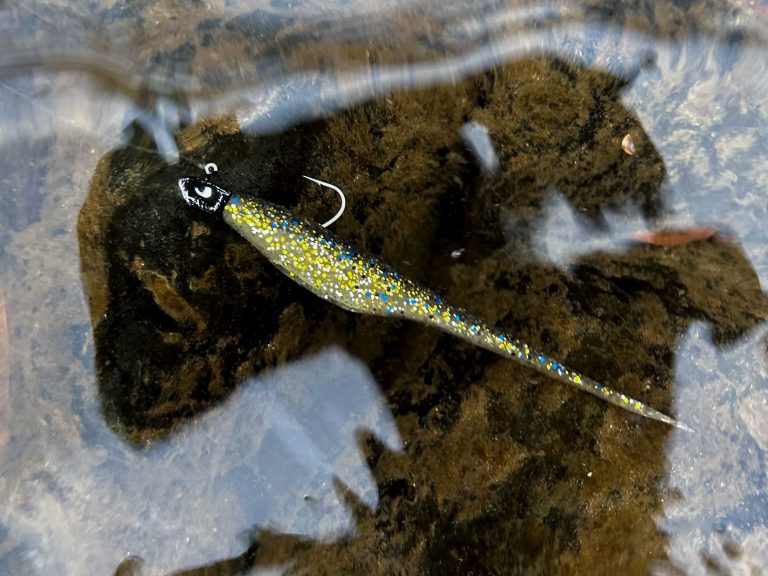
From the bank, I fish the Sling Shad slowly and deliberately. Each cast begins on a slack line, letting the bait fall all the way to the bottom before it ever comes alive. A quick pump of the rod follows—not to move it far, but to elicit a reaction from any fish that tracked it on the way down and to ready the bait for the stroll. From there, the retrieve is slow and constant, the reel turning steadily while I tap the slack in my line with subtle rod inputs, keeping the bait hovering just off the bottom. When the Sling Shad meets rock, I let it climb—riding up and over boulders before tightening the line and holding it there, allowing the bait to pendulum back down the face. That controlled swing, tight to wintering cover and dictated entirely by feel, proved to be the trigger—where most of my bites came.
From Bank to Boat
With trees overhead and brush at my back, I had to learn to work the bait with my rod in every direction—low and to the side, straight up, even across my body. These constraints on the bank forced me to manipulate the Sling Shad however the casting lane allowed. Back in the boat, this acquired skill proved invaluable. In the wind, keeping the rod low and off to the side reduced bow in the line, tightened the connection to the bait, and dramatically improved both lure control and bite detection. Just as importantly, blind casting from shore refined my cadence and feel, skills that translated seamlessly to the boat when wintering smallmouth were glued to the bottom and largely invisible on sonar.
The Sling Shad Advantage
Just as flat-sided crankbaits have long outperformed bulbous ones in winter for their tighter, more efficient action, the Sling Shad’s flat side-profile and ultra-soft plastic produce a tight, natural shimmy that excels in cold water. Rather than wobbling wide or throwing water, it slips forward with minimal displacement, delivering irresistible realism to draw bass out of their winter lethargy. And when it grazes rock or gravel, that ultra-soft body quivers on impact, keeping the bait alive where stiffer plastics fall flat.
Tools of the Trade
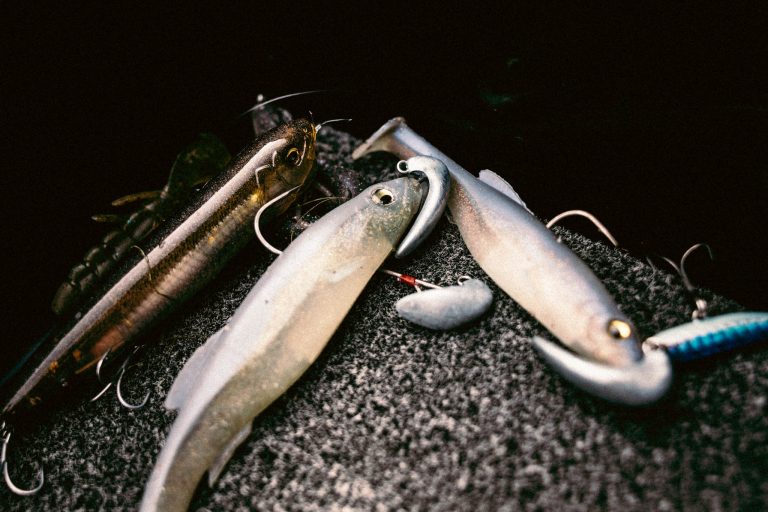
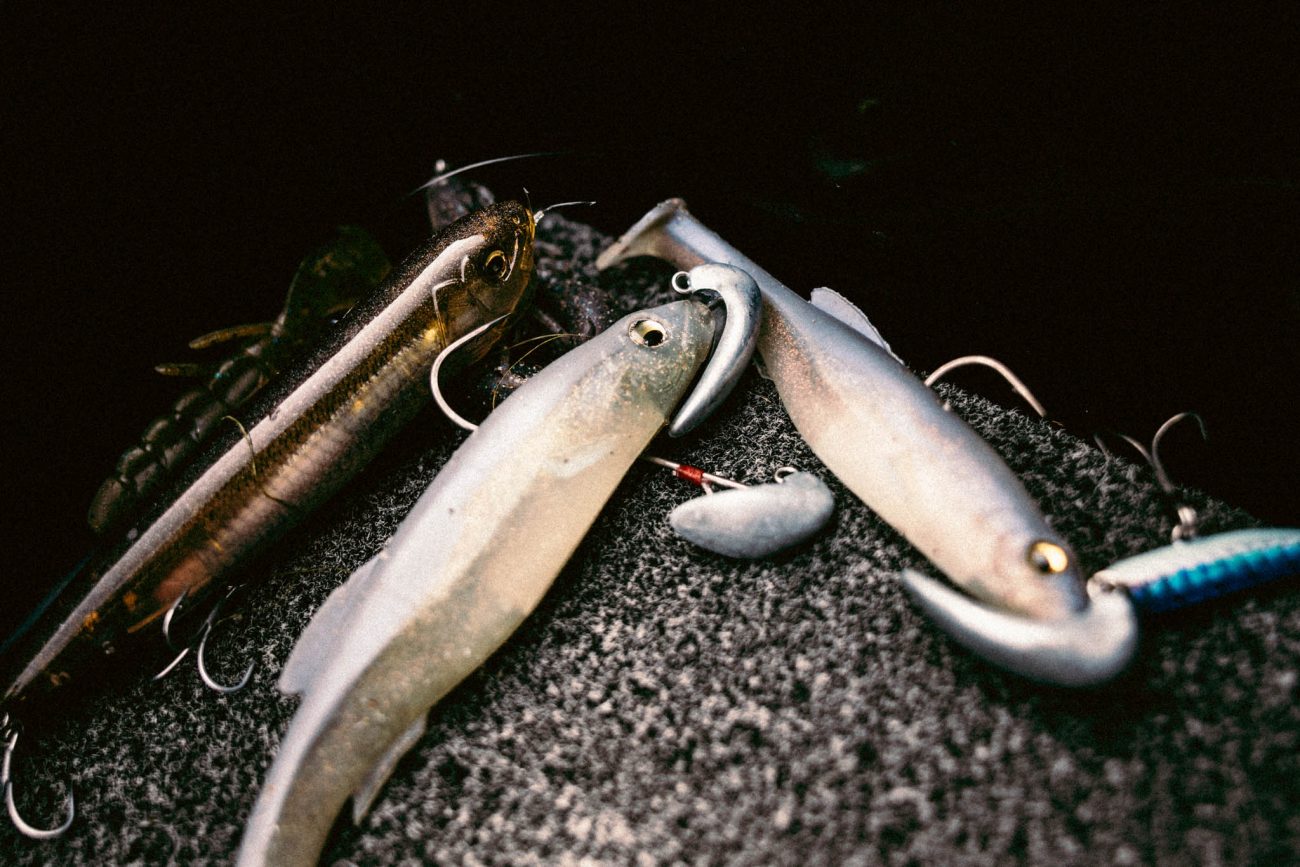
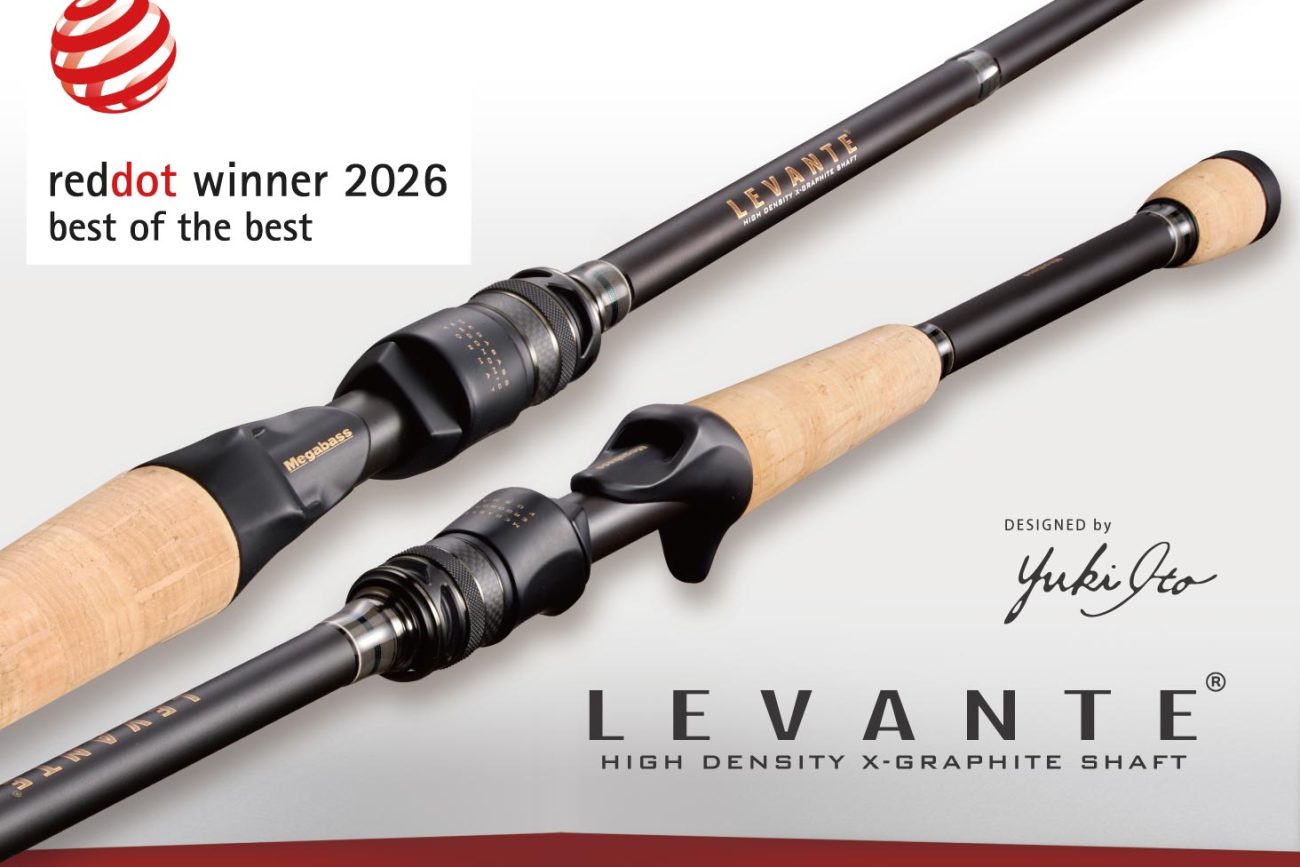
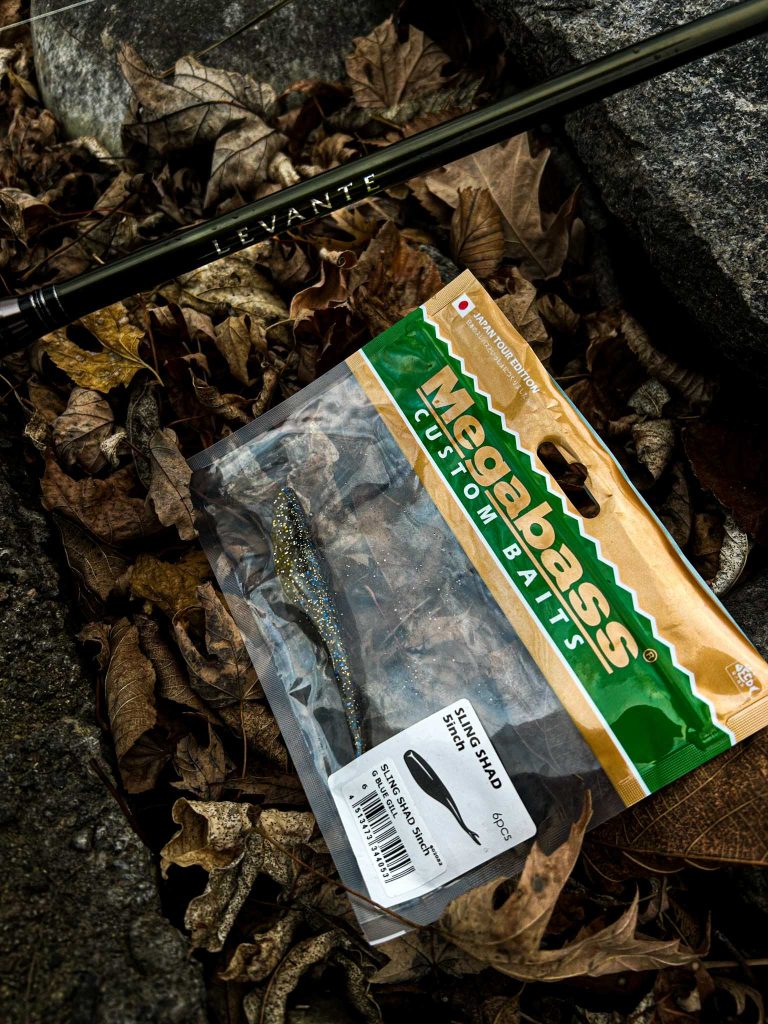
For gear, I relied exclusively on a Levante F3-611LVS Whipsnake. Its maneuverability and extra-fast tip made it ideal for manipulating the Sling Shad and delivering crisp hooksets, especially from the confined angles the bank allowed. Head weight varied by setting: from shore on the river, I favored 1/8 oz to account for shallower water and to maximize the pendulum swing without excessive snagging. Out on inland lakes, where winter smallmouth held deeper and wind exposure was greater, I bumped up to 1/4 oz to maintain depth control and contact with the bait. Color followed forage. In the river, G Bluegill and Golden Shiner matched the golden, bronze hues of suckers and shiners in tannic water, while on clearwater lakes French Pearl and Ablette better mimicked Cisco and open-water shiners. A perfection loop knot rounded out the system, keeping the Sling Shad perfectly horizontal throughout the retrieve, maintaining perfect posture during pendulum swings, and allowing enough freedom for the bait’s natural shimmy to shine.
Separating Strolling from Sonar
What struck me most was the anticipation. Without a screen telling me where to cast or how a fish was reacting, every swing of the Sling Shad carried that old familiar charge—the possibility that any cast could be “the one”. It was the feeling most of us fell in love with from the moment we could cast. And the beauty of it was that none of it came at the expense of efficiency. If anything, the lessons learned in the dark made me sharper once I stepped back onto the boat. Even in an era defined by screens, there’s certainly something to be said for learning the cues you can’t see.