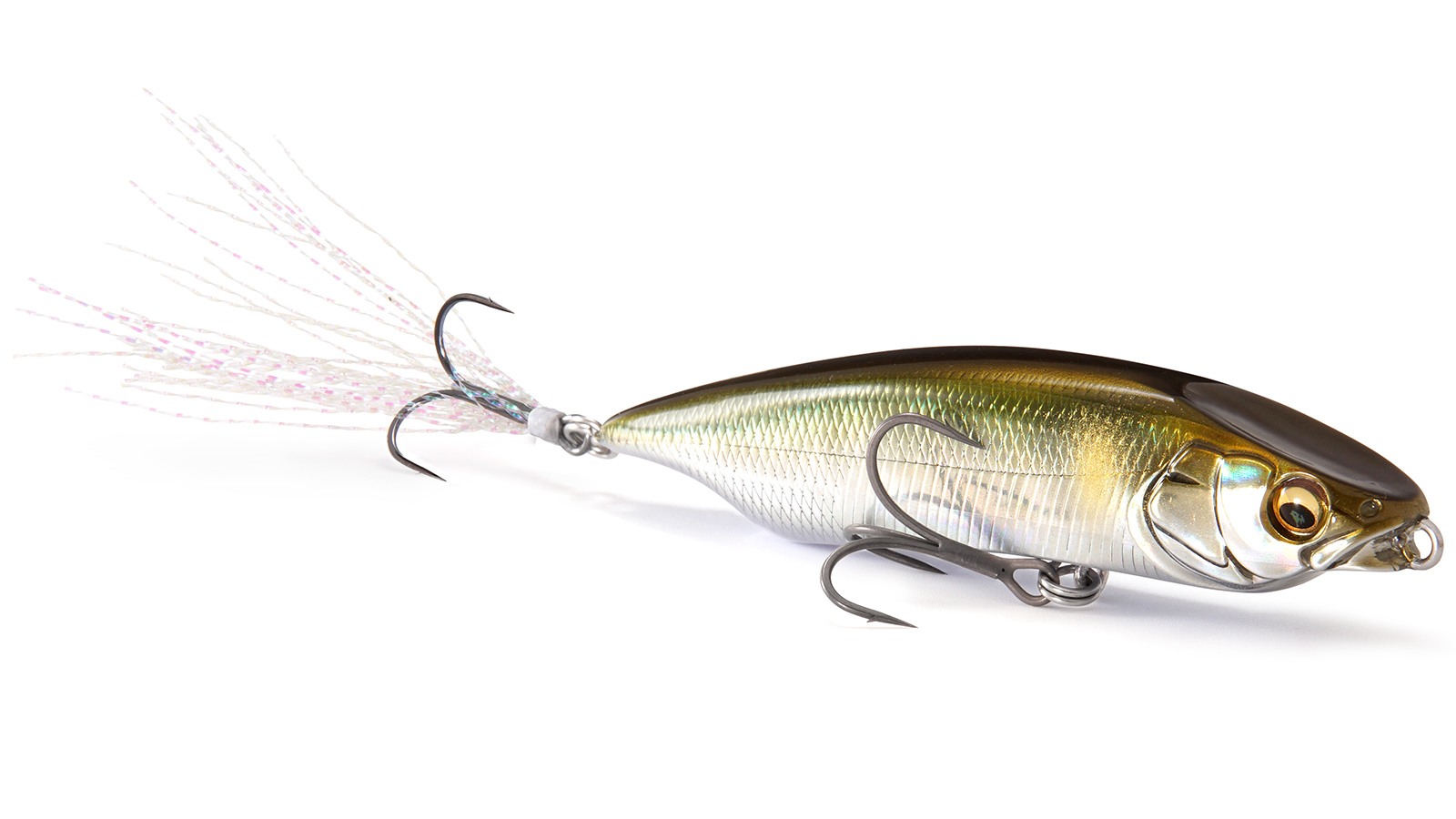
Karashi 80

$19.99

LENGTH:

80MM

WEIGHT:

7/16OZ

TYPE:

SLOW-SINKING

HOOKS:

#6

description

KARASHI 80 brings the genre-defying performance of the 59mm original to a harder-hitting middleweight size, expanding its deadly reach to a new class of targets. Harnessing Yuki Ito’s hard won hydrodynamic expertise, KARASHI unleashes bait-busting surface action with a fast retrieve and upward rod twitches, surface dog-walking, subsurface twitch-walking, and finesse i-motion with a straight retrieve. KARASHI 80’s extended darting range and dynamic ability are decisive strike triggers for targets that track other baits but won’t commit. With the uncanny range to coax even the wariest targets from inactive to active feeding stages, the KARASHI 80 is the embodiment of a deadly new class of Japanese lure technology.  


Action types: 

  • I-Motion – employ a super-slow retrieve just fast enough to keep the target depth range. The defenseless wobbling action evokes injured bait, triggering bites from opportunistic feeders. 
  • Twitching – work in a twitch of the rod to set the KARASHI darting sub-surface, exhibiting an agile dart that triggers reaction bites from followers. 
  • Dog-walk – a rhythmic twitch on the surface will deliver an irresistibly smooth dog-walking action. Pauses will allow the KARASHI to slow-sink and then walk its way back to the surface like a baitfish rising to escape. 
  • Bait-busting – with fast, upwards twitches of the rod and a speedy retrieve, the KARASHI walks, splashes and leaps along the surface like fleeing baitfish, triggering devastating strikes from aggressive feeders. 


Colorways

From the studio

Fishing the Okashira Screwhead Hair Jig: Dialing In the Drop

Replacing Urgency with Confidence In highly pressured fisheries, fish have become conditioned to speed. Fast-falling jig heads, aggressive retrieves, and predictable flash have become the norm. More often than not, that speed results in more follows and fewer commitments. For Arkansas guide and fly tier Daniel Roberts, the answer isn’t adding more action. It is […]

Read More »

Out for a Stroll: Lessons from the Bank with the 5IN Sling Shad

By: Theo Edeburn Strolling Secrets: Origins and Essence Hailing from Japan’s ultra-pressured waters—including legendary Lake Biwa—strolling emerged as a technique to present minnow-style baits with understated subtlety. Rather than relying on the exaggerated, side-to-side thump of a paddle-tail swimbait, anglers turned to straight-tail plastics, gaining control over their bait’s every move. Utilizing the same jighead […]

Read More »

Karashi 80 — A Bait With Range

Finding the Sweet Spot — and Knowing When to Push It The Karashi 80 exists in a dimension of its own, unlocked by its smaller predecessor.  Born from a bait-finesse mindset, it refuses to stay confined to ultra-light or ultra-subtle applications. Its real strength reveals itself when you understand where its operational center lives, and when conditions justify pushing outward […]

Read More »

Little white signs of freedom

By: Patterson Leeth  Every year, between the never-ending winter and the impending spring, a grey zone appears—both visually and theoretically. It’s trout season for my wife and me. I’ve found this doldrum to be an enjoyable respite from the windows and walls, and an excuse to traipse through soggy cow pastures and organic fields of […]

Read More »

35 Pounds on the Spark Shad 3.6IN

Poised for Precision Late fall strips away excess. As water temperatures fall and daylight shortens, smallmouth abandon inefficiency. They settle into precise places, pin to the bottom, and scrutinize everything that enters their world. Success during this window isn’t about speed or coverage—it’s about control, feel, and the discipline to slow down when instinct tells […]

Read More »

Disruption by Design: How the SPARK SHAD Trailer Changes a Vibrating Jig

The Anti-Finesse Approach As mapping accuracy improves and marine electronics continue to compress competitive advantages, bass in heavily pressured fisheries have adjusted accordingly. In the forward-facing sonar era, finesse techniques dominate much of the conversation, but their widespread adoption has also made them increasingly predictable. In that environment, separation often comes not from refinement, but […]

Read More »